Darren Paltrowitz Showcases Stimulating Conversations On His ‘Paltrocast’ Podcast

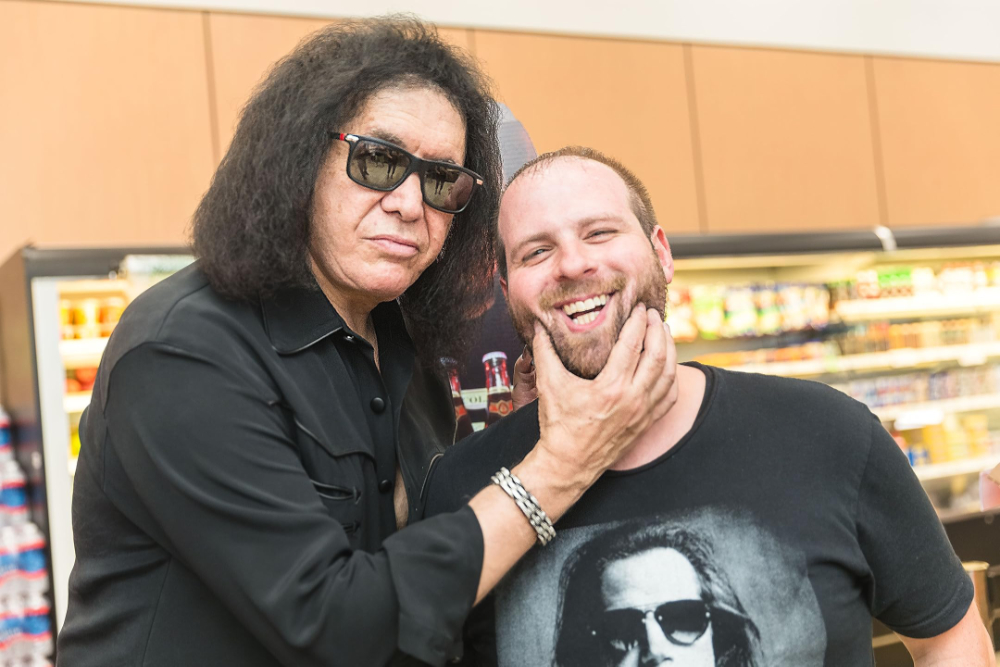
Darren Paltrowitz hosts the Paltrocast, a New York-based podcast series that covers entertainment and culture, serving up in-depth conversations with musicians, actors, athletes, and other cultural influencers. The show airs with a mix of audio, video, and article-based coverage and is regularly picked up via over 150 television stations and other carriers across major U.S. markets.
In addition to his podcast, Darren is a licensed private investigator and the author of “DLR Book: How David Lee Roth Changed The World” and co-author of “Good Advice From Professional Wrestling” and “Pocket Cash: Your Happy Money.”
I wanted to talk with Darren to dig into how he started his popular podcast, learn about any challenges he faced, and have him share any tips. He asks his guests great questions that provoke interesting stories. Read more below…
Wendy Shepherd: When did the idea of starting a podcast first come to mind, and who or what influenced you?
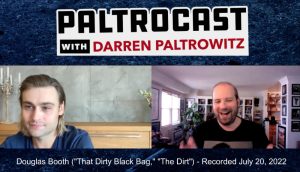 Darren Paltrowitz: I’d been interviewing people for years — since I was in high school — and the podcast idea came from wanting a home for conversations that didn’t fit neatly into print or written Q&A. Early inspirations were long-form radio, Howard Stern, and podcasters who prioritized real dialogue over soundbites.
The Paltrocast evolved from an audio-based podcast in mid-2020 into a video-based show that also runs as a podcast and in article form. It now airs regularly via over 150 TV stations and OTT carriers.
W.S.: From learning about podcasting to launching your first podcast, how long did it take? Where did you start?
D.P.: Years. So many false starts. I became a casual podcast listener in 2005 or 2006, and then a few years later became an almost-daily listener because I had a regular long commute. And that was still a few years before the rise of Nerdist, Marc Maron, Joe Rogan, and other key podcasters.
Once I really started to focus, all those years later, it was a few weeks of research, testing basic gear, figuring out a workflow, planning episodes, coming up with a name and logo, learning back-end tech, etc. Some of my early interviews were taped over Skype, others in person. A few years later came Zoom. I taught myself to edit audio at the beginning, then video editing later on. Learning by doing and evolving with the technologies available to me are the main constants.
W.S.: What are some challenges you had to overcome to get to where you are today?
D.P.: Consistency, scheduling, and earning trust. Coordinating guests, managing tech across platforms, and finding time around other jobs were early hurdles. Growing the audience required patience and doing the work even when results were slow. Before long, it wasn’t a “who can I get on the show?” but rather a “which guests make the most sense to say yes to?”
Once that all became manageable, the challenges evolved. Like, figuring out why I do this and making sure it was for the right reasons. I also received a lot of terrible advice that, over time, I had to learn was just misguided and was coming from someone who didn’t spend much (or any) time really listening to my show. I also learned that a lot of it is “a show,” which includes guests and fellow interviewers, so sometimes you need to figure out what’s best for you and your series.
W.S.: Do you have some tips or tools that you’d like to share?
D.P.: Keep the setup simple, stay curious, and prepare—but not so much that you lose spontaneity. Good audio matters more than flashy gear. A stable recording platform, a reliable mic, and clear communication with guests go a long way.
On a different wavelength, consistency is key. A lot of people talk about starting a podcast or YouTube channel, put up a few episodes, then abandon it after not seeing immediate views. Or they overhype with “coming soon” and “major announcement” teasers that don’t properly materialize. Instead, underpromise and overdeliver.
W.S.: What steps do you take to formulate an episode of your podcast?
D.P.: Generally speaking, I research the guest, map out themes rather than a rigid script, and aim for questions they haven’t been asked a thousand times. The focus is always on a natural conversation that reveals something new about the person.
After editing everything and seeing what I have lying around from the past week or so, I’ll see what fits together for episodes. I try to make a few episodes at a time, and always be a few episodes ahead.
W.S.: Can you share a surprising or memorable story from your show?
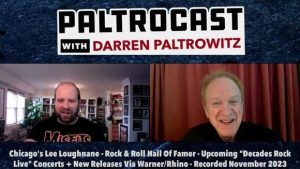 D.P.: In taping thousands of interviews over the last five years and thousands before that, between email and phone interviews for other outlets, that’s a tough question.
As in, what I loved about speaking in person with Gene Simmons of KISS had little to do with what makes Steve Vai or David Coverdale so inspirational or fun to speak with. But I’d say you know you are onto something good when you get to interview the same person multiple times.
Sometimes the highlight is the person sharing career pivots, personal struggles, or behind-the-scenes stories they don’t usually tell. Sometimes that happens, and you don’t realize you got an exclusive until another media outlet picks it up and states it as such. And sometimes the highlight is that you showed another side of a person who is often pigeonholed as having a certain kind of personality.
W.S.: How do you measure success — downloads, impact, or something more personal?
D.P.: To me, impact and longevity matter more than raw numbers. If a guest feels well-represented, if a story reaches someone who needed to hear it, or if stations keep syndicating episodes, that’s success to me.
Repeating myself, when a guest comes on the show for a third time, I know that what we are doing falls into the “success” bucket, as talent can generally veto interviews they don’t want to do.
W.S.: Who would you love to have appear on Paltrocast in the future?
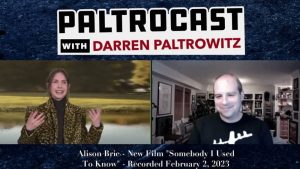 D.P.: I used to have a long list of talent I wanted on the show, and over time, a lot of those people became Paltrocast guests. I no longer have a list like that, and generally don’t chase down talent anymore.
That’s not to say I don’t want to have Andrew Dice Clay anymore, just that I’d rather have people who know what my show is about and are happy to be part of it. Rather than “you have 5 minutes to speak with this big star, please only ask about their new project, and we reserve the right to approve the interview before you post it” — that stuff is more common than most people realize, and I’m close to done with it.
W.S.: What would you like your audience to gain from your show?
D.P.: A genuine sense of who the guest is, plus something practical or inspiring they didn’t expect. I want the episodes to feel like conversations you’re glad you listened in on.
W.S.: Outside of your Paltrocast show, what new things are you working on?
D.P.: My latest book was last year’s “DLR Book: How David Lee Roth Changed The World.” Rather than writing a full-length follow-up, I’ve been working on chapters for a few collections due to come out in 2026 and 2027, have been hosting some live events – – including one in October at Carnegie Hall – – and am tying all of that in with a non-profit I just launched called Paltrohelp.
Ultimately, I try to keep a mix of creative work, research, and service—things that complement the podcast but stand on their own. And if you ever need a licensed Private Investigator or an Archivist/Librarian, you know where to find me.
W.S.: What are some of your top podcast shows?
D.P.: Some good recent Paltrocast episodes (all also available in video format):
– Alexandra Daddario + Drew Van Acker + cast of Power Book IV: Ghost
– Rob Riggle + Christopher Leone + Brian & Mika Kleinschmidt + Jeremy Workman
– Guy Pearce + Rachael Yamagata
– Neil Giraldo + cast of The Wide West
Podcasts I enjoy besides my own:
– Who Are These Podcasts? (a favorite)
– The Adam Carolla Show, especially when there’s a strong guest
– A number of shows I loved are no longer active, including The Gilbert Gottfried Amazing Colossal Podcast and WTF with Marc Maron
My taste tends to lean toward conversational shows that allow for personality, humor, and unpredictability rather than tightly scripted formats.
W.S.: Thank you, Darren! Best wishes with your show and future endeavors!
Everyone can check out more details about Darren Paltrowitz and his Paltrocast show at https://paltrocast.com/ and subscribe to his YouTube channel.
Photo credit: David St. Onge